












I could make Slate’s WhatsApp integration a lot more powerful. Menus, suggestions, natural-language planning, summaries, reminders, maybe even a friendly little personality. It could grow into a second app living inside WhatsApp, commands branching into commands, until the capture channel is itself a product you have to operate.
I do not want that, and not because any of it is impossible to build. Capture and planning are different jobs, and a messenger is only fit for one of them.
Capture usually happens elsewhere
A task rarely shows up while you are at the right desk with the right app open. It shows up while you are walking to a meeting, waiting for coffee, standing in a hallway, halfway through reading a message, or trying to leave the house. That is the whole difficulty of capture: planning apps want to be opened, and a brain mostly wants to be done with the thought. Tasks get lost in the gap between those two wants.
The best capture surface is whichever one is already open when the thought arrives, elegant or otherwise. For many people that is WhatsApp. It is already on the phone and the desktop, rarely out of reach, and it is where people send fragments of things before they are tidy enough for anything else. Capturing tasks through it is just meeting the thought where it landed.
The messenger should not become the planner
If “ask Priya about the invoice wording” surfaces while you are leaving a call, opening the full planning surface can be more friction than the thought will survive. Sending a message costs almost nothing, which is roughly the budget capture has to fit inside.
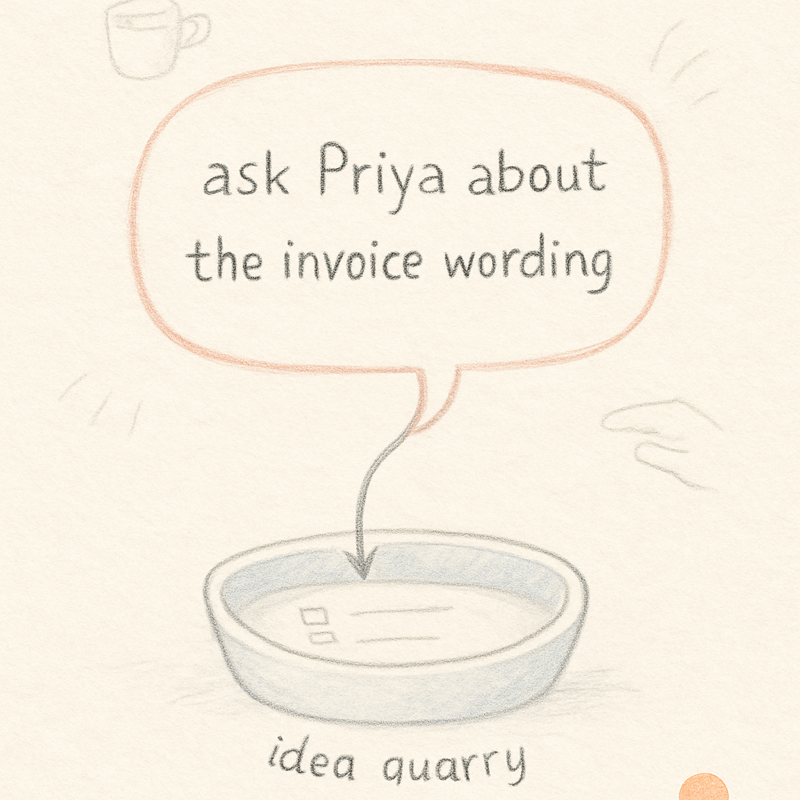
There is a line to watch, though. Give the channel commands, menus, suggestions, little attempts at conversation, and the friction comes back as a second place to manage, one more surface that needs reconciling.
So Slate’s WhatsApp channel is deliberately thin. You pair once with an eight-digit code, then use the few commands that actually belong in a messenger: add, check, list.
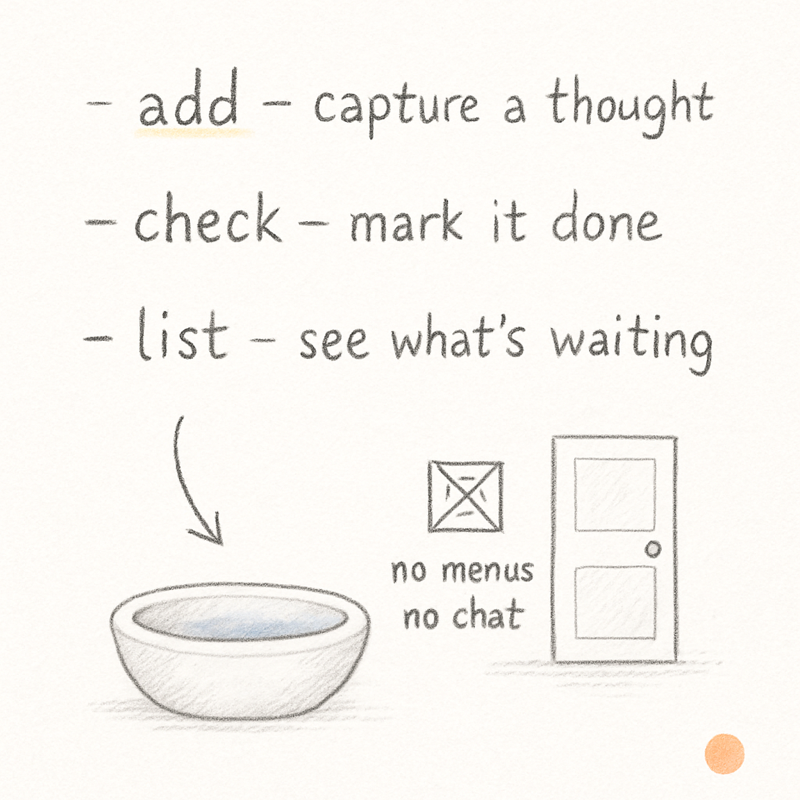
The planning itself stays in Slate, where the weekly slate and the Idea Backlog can be seen together. The messenger has one job: letting a thought leave your head before it evaporates.
Capture is not commitment
A captured task is not automatically a plan. This is the same reason Voice-Dump output lands in the Idea Backlog: capture should lower the cost of remembering without raising the cost of deciding.
When a WhatsApp message becomes a task, it goes into the holding area by default. You can also name a day and it will land there instead, which is useful when the thing genuinely does belong to Tuesday. Later, when you are actually planning, you can move it, rewrite it, check it off if it turned out to be already done, or delete it because it was a passing worry pretending to be work.
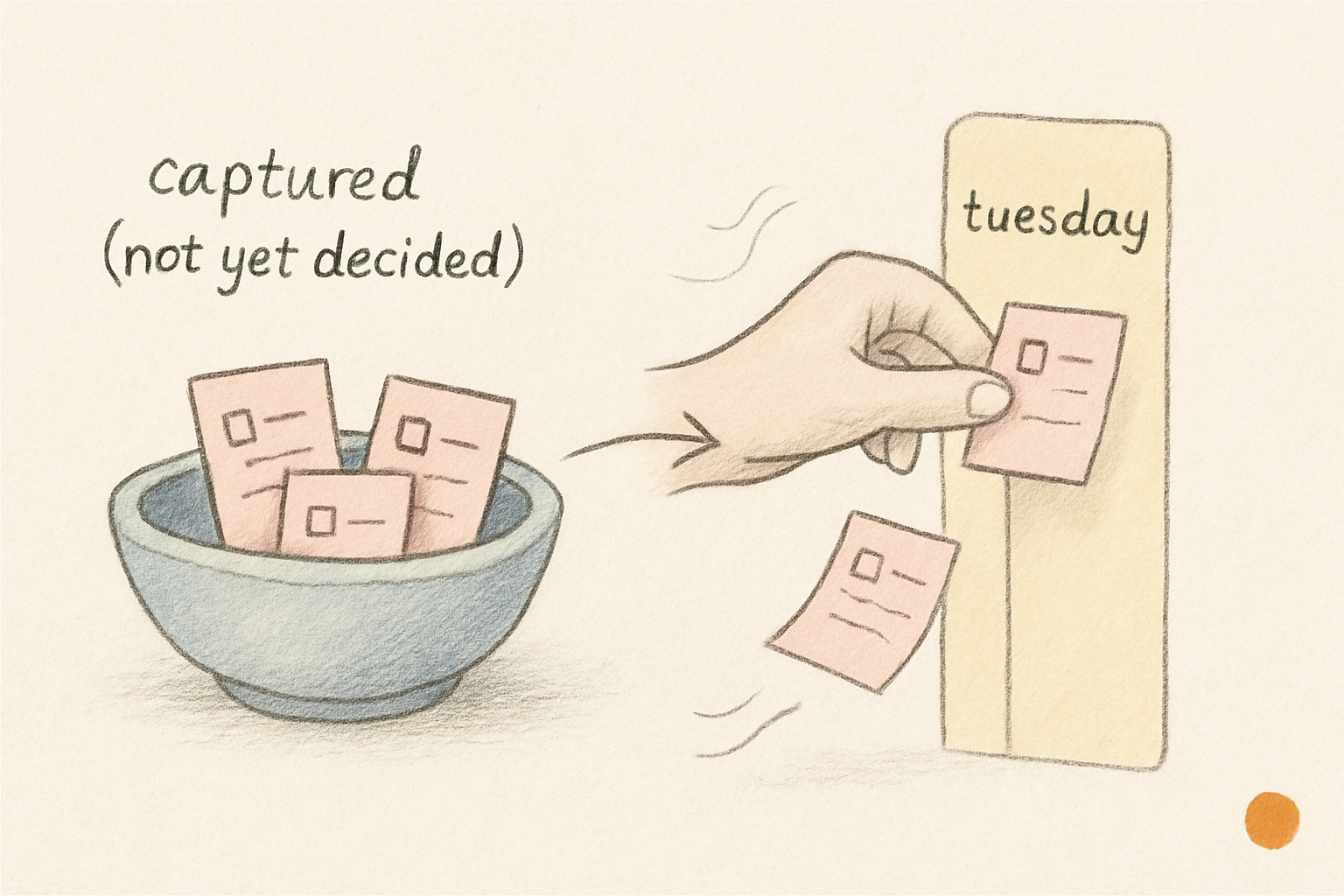
That later sorting is what separates a capture channel from a second to-do list, which would just be one more place to reconcile. The channel feeds the one place where the week is made.
Thin is the feature
Thin tools are easy to underestimate because they do not produce many screenshots. Here the thinness is doing the work. A capture channel should be reliable and plain, and ideally a little awkward to press into jobs it was never meant for.