



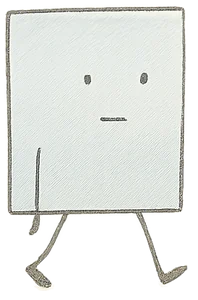








Paper to-do lists never went away, and I think the crossing out is most of the reason. You feel the pen go through the words. They stay where they were, just handled. Most digital lists swapped that for a checkbox and a fade, so the task leaves the screen politely, the way a plate gets cleared from a table.
It works. Something is missing anyway, and I have never managed to argue it away as nostalgia. Finishing something is information for the app and an event for you. It deserves a beat of acknowledgement, and a beat is genuinely all it needs.
A strike is different from a fade
Slate’s completion animation draws the line. That is the whole animation, not a flourish sitting on top of a fade, and it holds the finished task on screen for a moment before the list moves on. A task that vanishes instantly makes finishing it feel like filing.
Celebrate less often, better
Reward systems usually fail by firing too often rather than by being childish. Confetti on every checkbox stops reading as a reward at about the fourth checkbox. Worse, if the app applauds everything, I will start adding trivial tasks just to hear it, and I do not want to be that person.
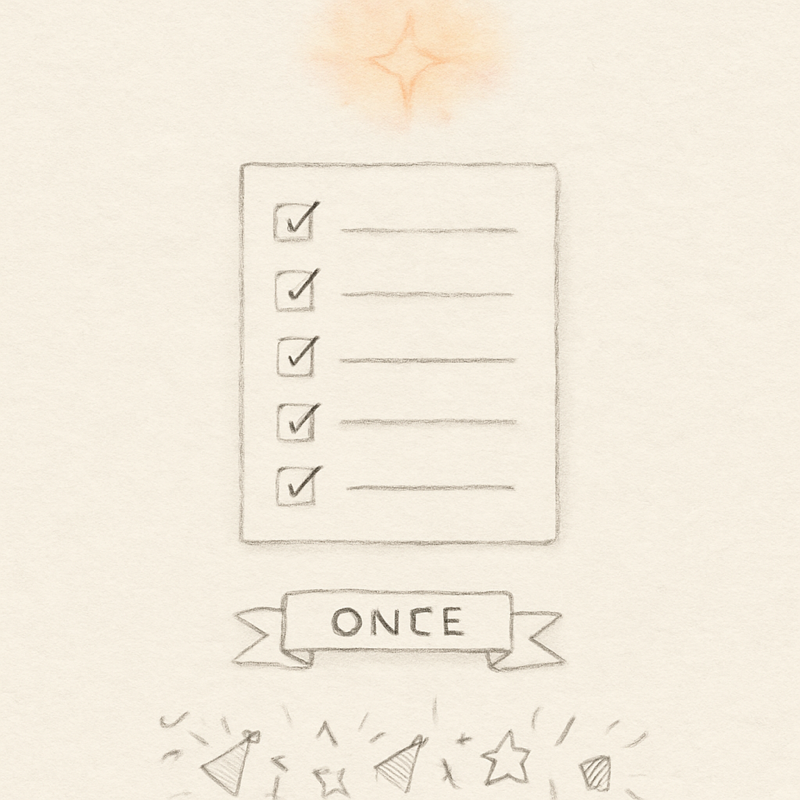
So Slate saves the bigger celebration for the thing that earns it: a clean slate. A day cleared, or a week cleared. It fires once, not every time a checkbox changes state. Completion should be visible, and then the app should get out of the way.
The achievements worth having
Achievements are where productivity tools tend to lose their composure. They end up as corporate badges, or as small demands wearing a party hat.
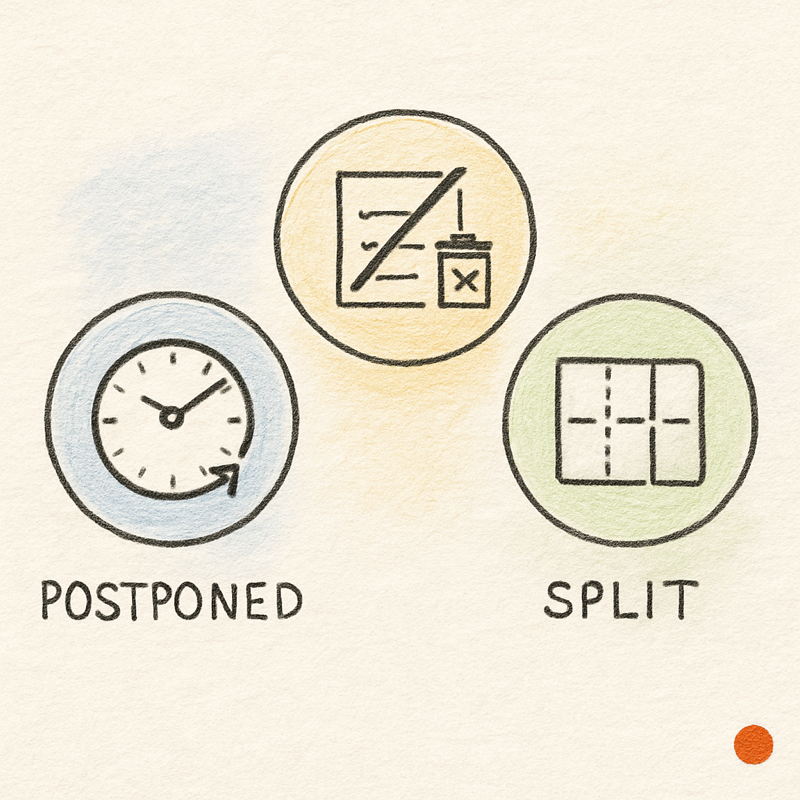
Slate has the obvious ones, for finishing more than three or more than five tasks in a day. The ones I actually like are stranger: postponing a task, deleting one, breaking a big task into smaller pieces. They are not jokes. Postponing something without turning it into a crisis takes judgment, and so does admitting a task has quietly died. Splitting a task before it becomes a wall is the one I have to force myself to do.
Those achievements reward the decisions that keep a plan healthy. Counting completions rewards a plan for looking busy.
One flame, easily ignored
Streaks go bad in a predictable way. The longer one runs, the more you find yourself protecting the streak instead of the thing it was supposed to measure, and it is very easy to keep a streak alive on work that did not need doing.
Slate has one flame. It is daily, it is quiet, and it can break without the app treating the break as an incident. If you like the signal, it is there. If you do not, it will not chase you.
That feels like the right dose. A planner can have small pleasures in it without turning into a game. Mostly that means giving completion a bit of weight and then leaving the day alone, which sounds modest until you go looking for an app that does it.